
October 1935
"Across the World's Largest Ocean with the Longest Hops"
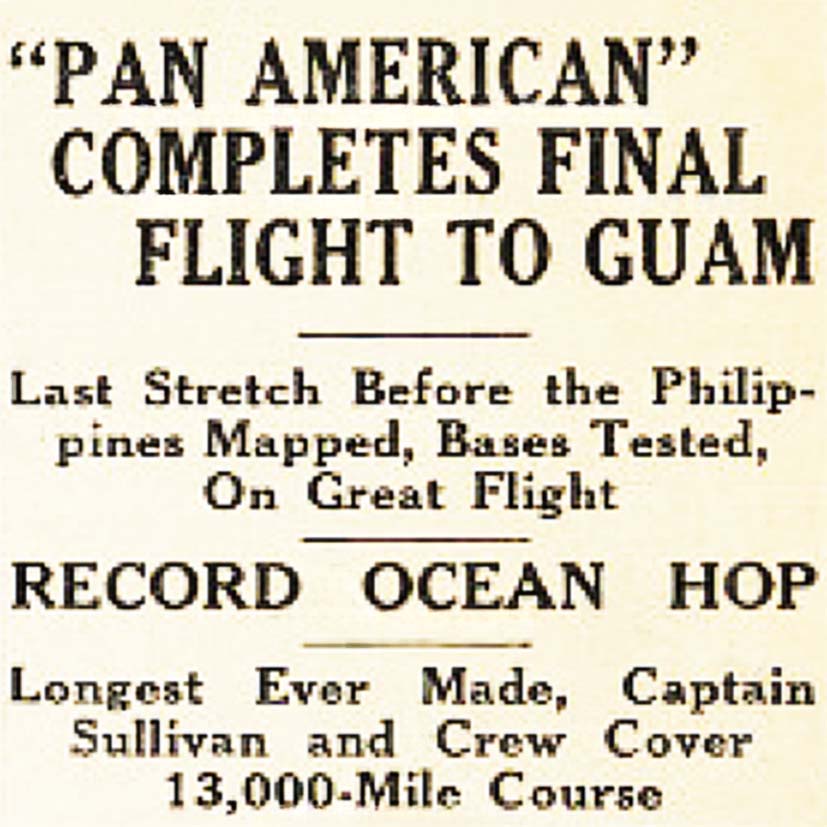
Headline from Pan American Air Ways, Vol. 6, No. 5, Sept-Oct. 1935 cover page (PAHF Collection & UM Special Collections).
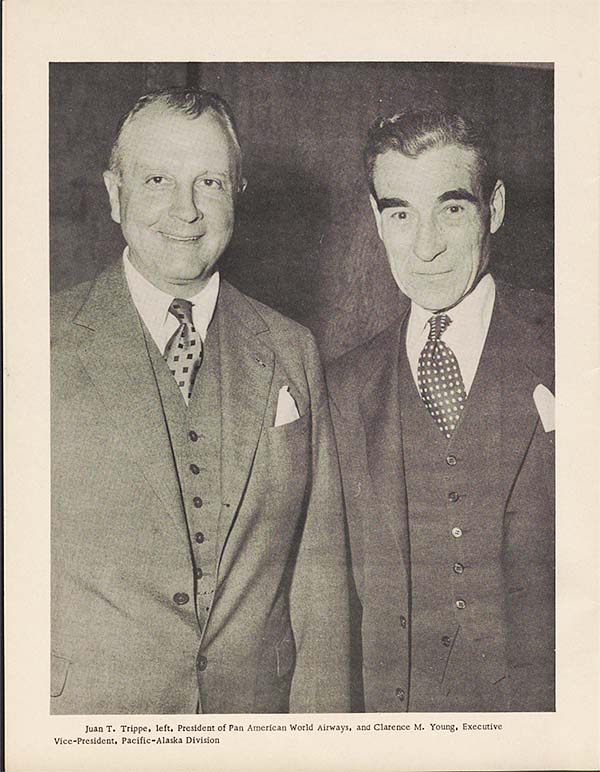
Juan Trippe with Clarance Young from the Pan Am report, "20 Years of Progress," the history of Pan Am's Pacific-Alaska Division, 1955 (University of Miami Special Collections) p. 1.
Pan Am's Fourth Survey Flight
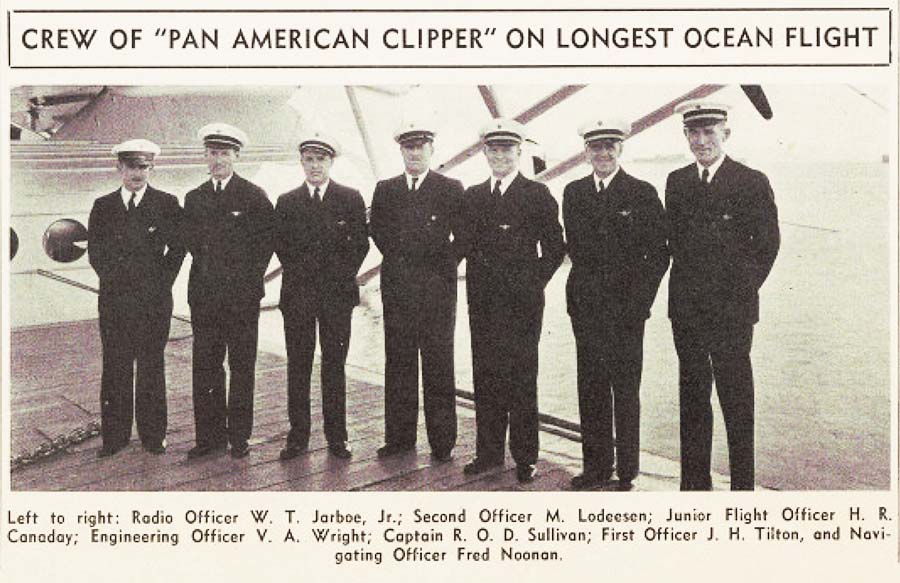
With detailed planning and preparation by PAA's Pacific division under Executive V.P. Clarence M. Young, Sikorsky S-42 "Pan American Clipper" took off from Alameda for Guam on October 5, 1935. After months of constructing and staffing Pan Am bases on islands across the Pacific, carefully conducting trial flights and testing equipment, Pan Am was prepared for its longest flight to date. Read more about the base that Pan Am developed in Guam in our 1935 series.
In Alameda, onlookers had become accustomed to ceremonial fanfare during the summer of Pan Am’s Pacific survey flights. At the take off for the long flight to Guam, four Pan Am executive -- whose prominent roles in transpacific flight operations were highlighted in the company newspaper -- watched as R.O.D. Sullivan and his crew departed on their record-breaking journey to Guam.
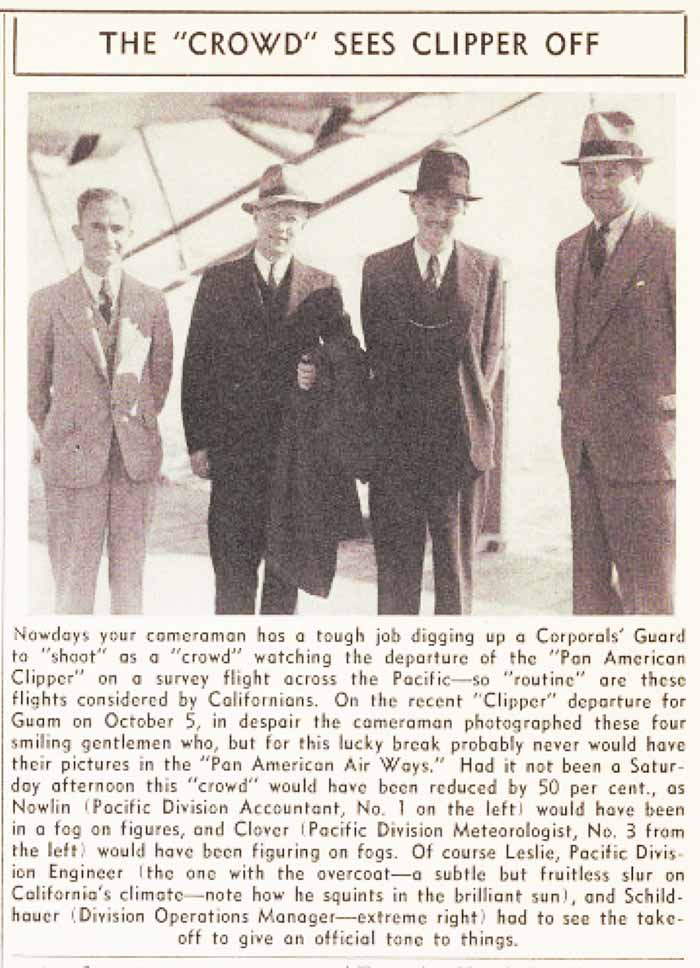
Photos from Pan American Air Ways, September-October 1935 (PAHF Collection & University of Miami Special Collections).
Fourth Survey Flight - California to Guam
Heading West
Return Fight to the Mainland
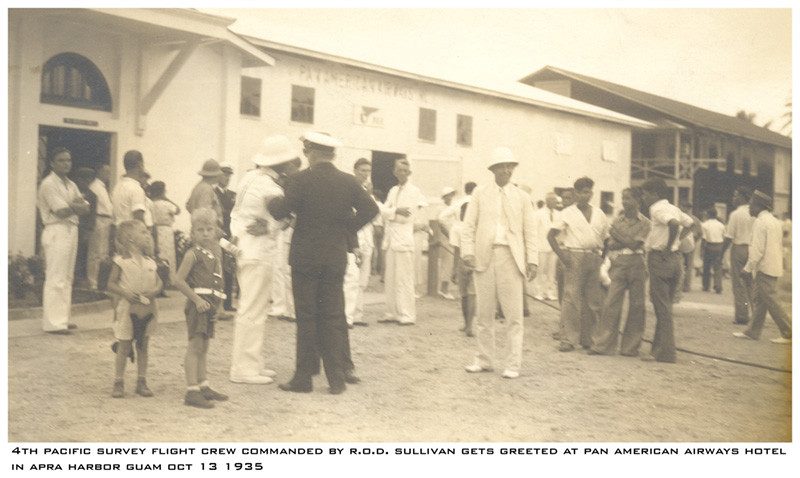
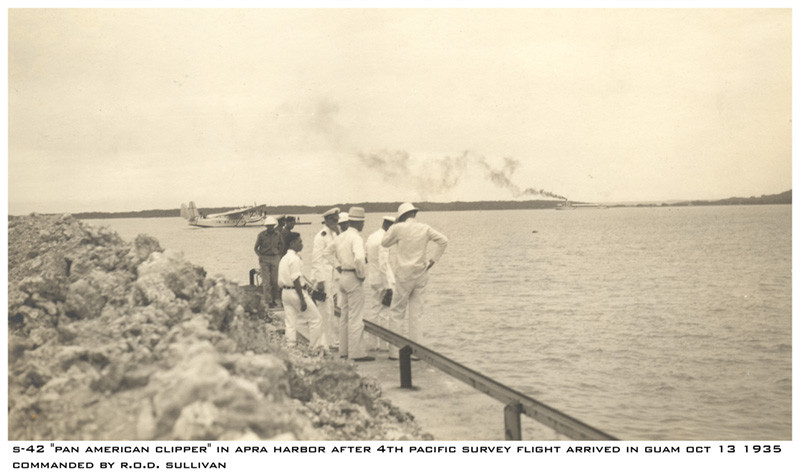
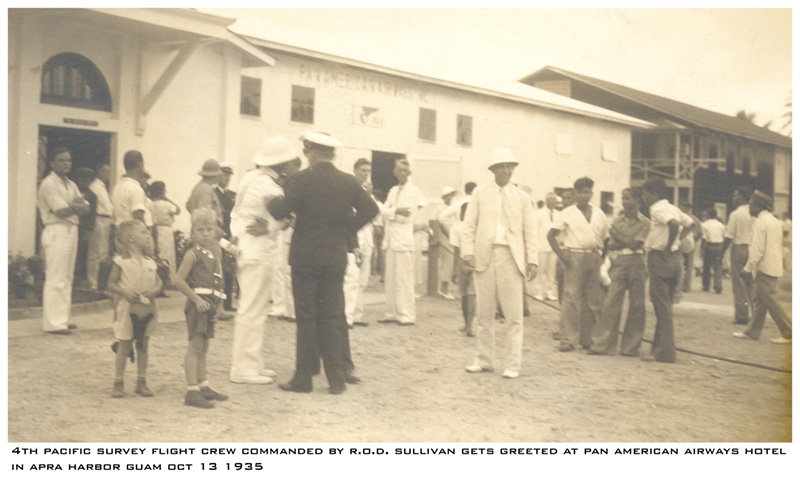
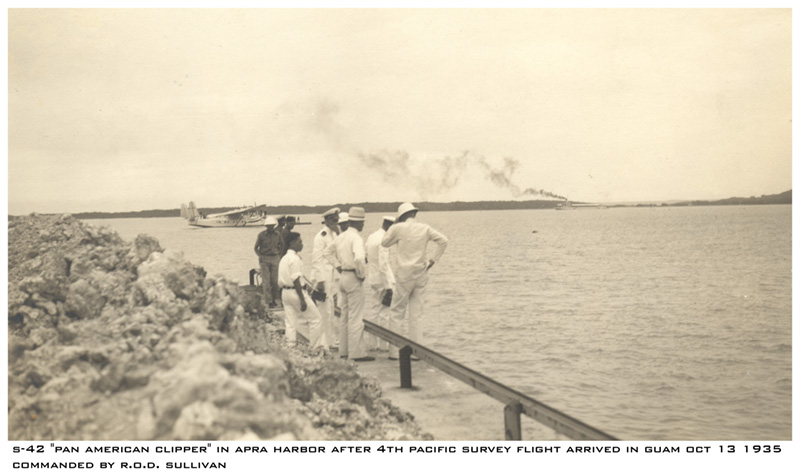
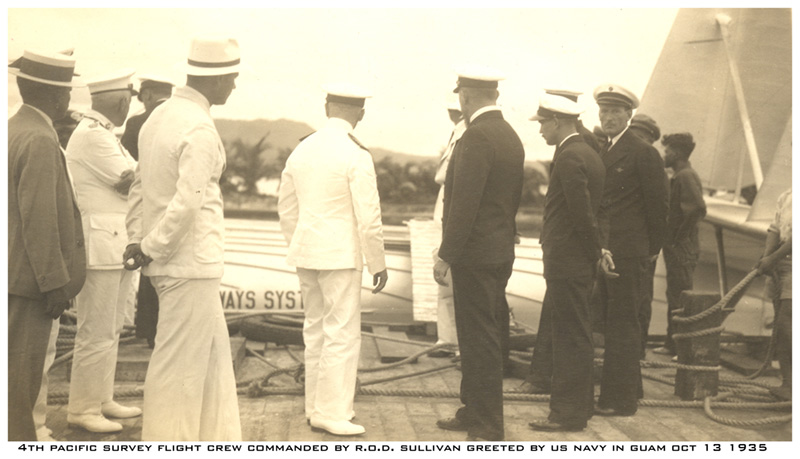
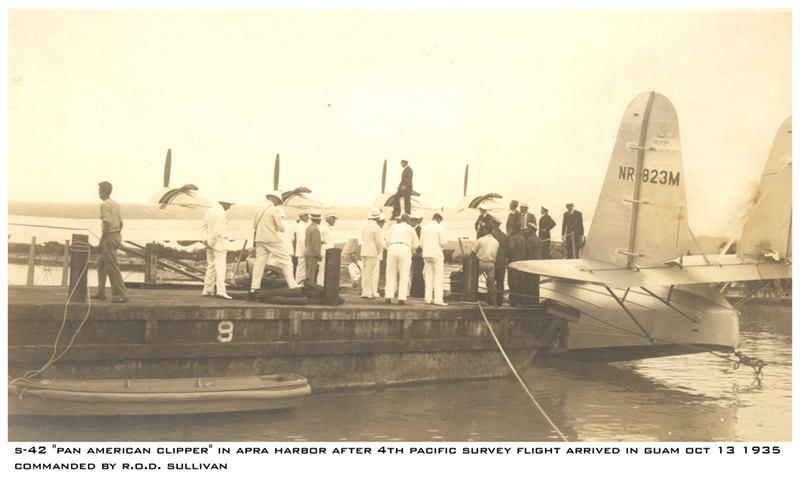
ARRIVAL AT GUAM
Photos of the fourth survey flight arrival on October 13, 1935 from R.O.D Sullivan photos/PAHF Collection.


PAA CACHETS- GUAM
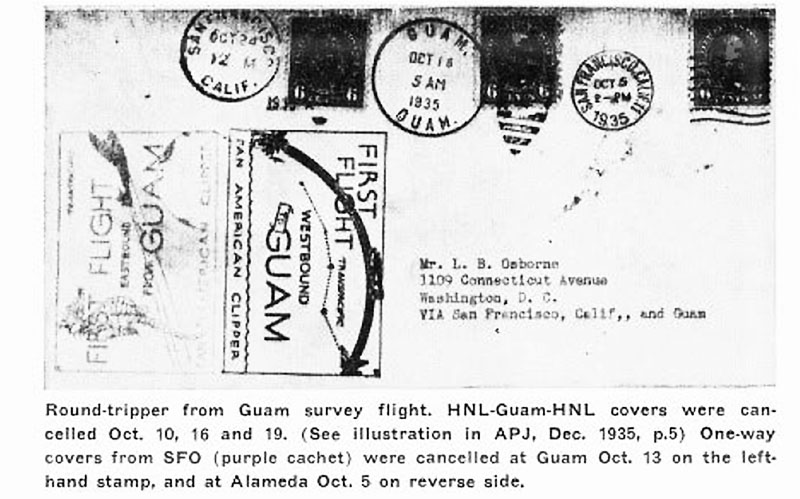
Image of Guam Survey Flight Cachet: John Johnson collection/PAHF collection, Airpost Journal, April 1985, p. 224.
From the S-42 "Pan American Clipper" to the M-130 "China Clipper"
When Pan Am sought out aviator/author Wolfgang Langewiesche to write a new history of the airline, Langewiesche presented a concise recap of all the remarkable events of 1935, from the huge success of Pan American Clipper's transocean voyages to the delivery of the largest transocean passenger transport to date, the Martin M-130 China Clipper. The M-130 was received by Pan Am in a ceremony at Middle River, MD on October 9, 1935 and would take Pan Am across the Pacific to Manila in November of that year.
“... the Sikorsky S42 made four survey trips, in all. Each went one station further out, and back to San Francisco. The first one, in April [https://www.panam.org/pan-am-apr-1935]… The second, by Musick and Sullivan was in June to Midway and ‘back [https://www.panam.org/pan-am-june-1935]. The third, by Sullivan and Tilton, in August, was to Wake and back [https://www.panam.org/explorations/wake-survey-1935]. The fourth, by Sullivan and Tilton, was in October and went to Guam.
By that time, other things had happened. The original 41 men [of the Pacific Division] had grown to 221. The North Haven had returned from her island expedition, and had brought most of the construction crews back with her. The islands were ready for action. The Post Office had advertised the ocean mail contract for bid on August 13th 1935, Pan Am had bid the maximum, $2 per mile, and (there being no other bidders) was awarded the contract on October 24th. The next ocean airplane, the Martin 130, had been finished. . . Musick and his crew had gone to Baltimore, taken delivery of the first ship, tested it out of Miami, and flown it to Alameda [Nov. 7th] .”
— Wolfgang Langewiesche's Pan Am Manuscript, c. 1960. (Pan Am Historical Foundation collection, courtesy of SFO Museum).
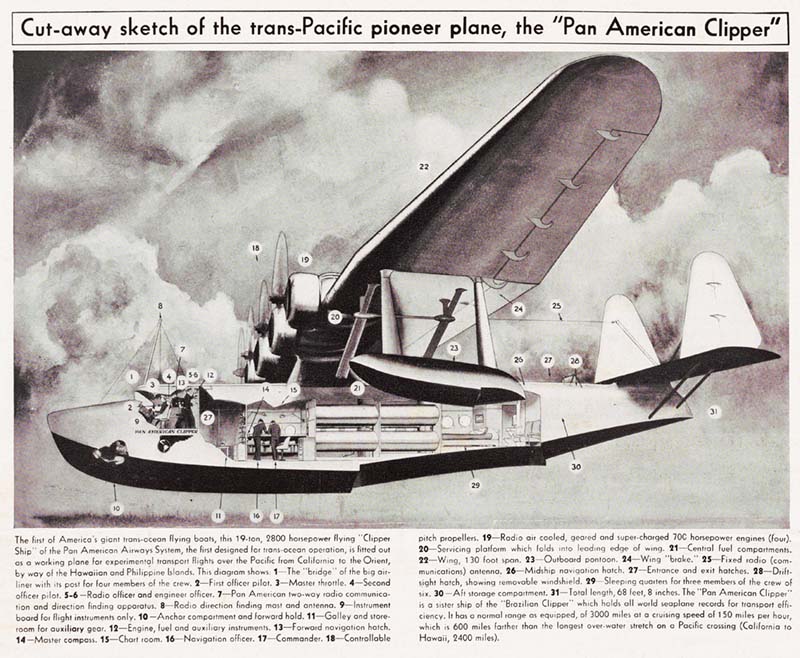 "Cut-away sketch of the trans-Pacific pioneer plane, the Pan American Clipper," Sikorsky S-42 (University of Miami Special Collections).
S-42 "Pan American Clipper" in Service for Nine More Years
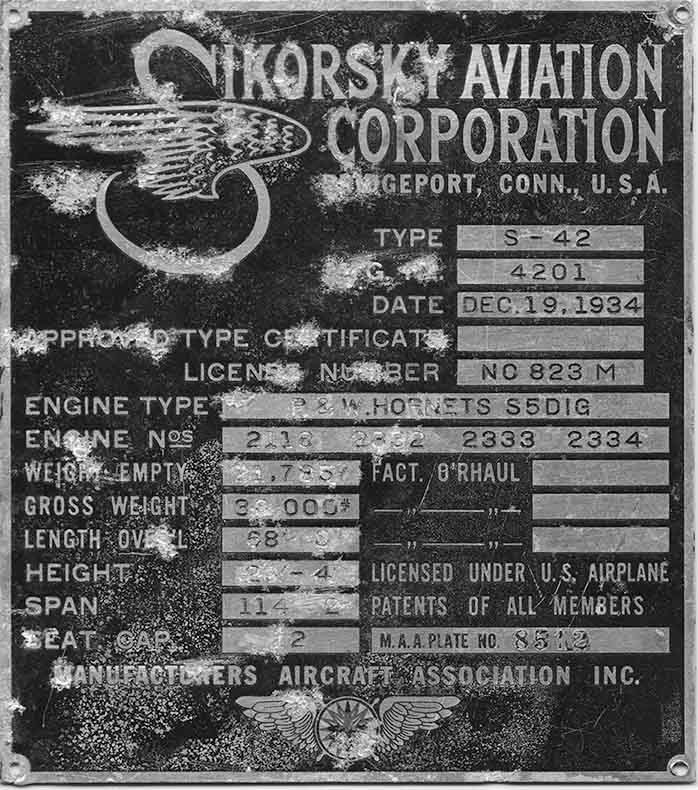
The only extant physical remains from a historic aircraft that opened the Pacific for commerical aviation : The manufacturer's data plate that was salvaged from the wreck in 1944 of Sikorsky S-42 823M (Gene Banning/Pan Am Historical Foundation Collection).
Epilogue
“Upon her return to Alameda from the Guam survey flight, the NR-823M saw service as a training aircraft within the Pacific Division. In the spring of 1936 she was returned to Miami and placed in full passenger configuration to fly South American and Caribbean routes. Records indicate her license was changed to NC-823M on April 26, 1936. She was soid to the U.S. Navy on April 12, 1942 and re-sold to Pan Am on August 31, 1943. She ended her service on August 8, 1944 at Antilla, Cuba in an accident in which she was damaged beyond repair.”
— John L. Johnson, Airpost Journal, April 1985, p. 224.
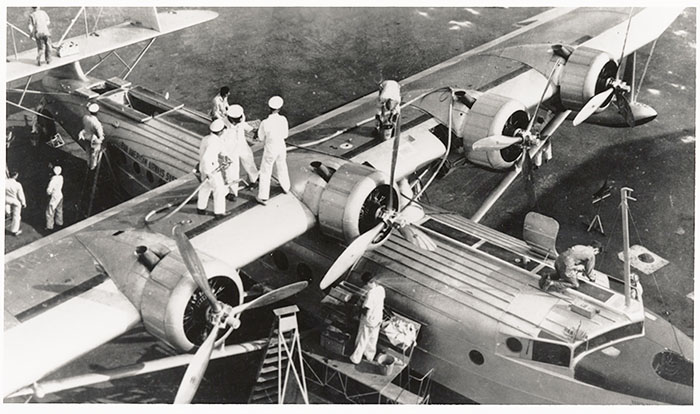
“Pan American Airways Sikorsky S-42 overhaul,” photographed by W. F. Gerecke, UM Libraries Digital Exhibits https://scholar.library.miami.edu/digital/items/show/673
Sources:
 Return to Pan Am in 1935 - articles by month